When do you use i.e., and when do you use e.g. and what do they mean?
Question: When do you use i.e., and when do you use e.g., and what do they mean? Answer: The Latin […]
Question: When do you use i.e., and when do you use e.g., and what do they mean? Answer: The Latin […]
Former comes before latter. The word itself means “coming before in time” or “preceding in place or arrangement”. If you […]
If you are not familiar with tennis rules: Djokovic’s racquet crossed the net as he hit the ball for an […]

An auto-antonym (sometimes spelled autantonym), or contronym (also spelled contranym), is a word with a homograph (another word of the same spelling) that is also an antonym (a word with […]
One crative way to help learners improve their vocabulary is the use of images and funny double meanings. When you […]
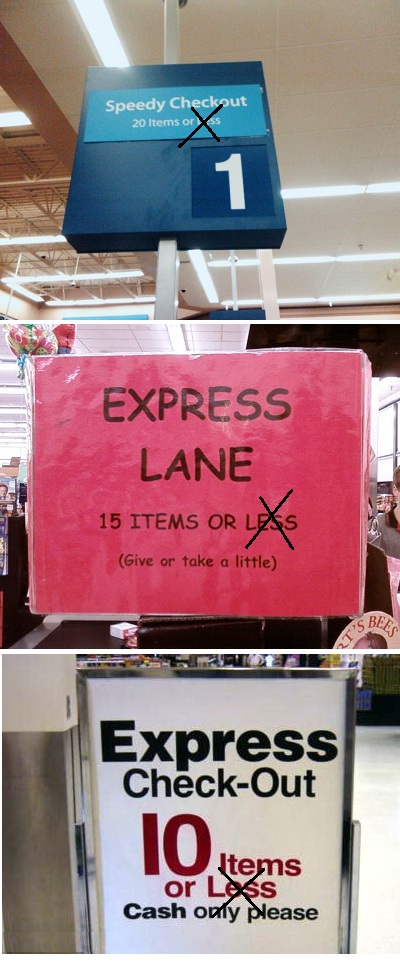
Use fewer with objects that can be counted one-by-one. Use less with qualities or quantities that cannot be individually counted. […]