What’s in a minute?

The Information Age (also known as the Computer Age, Digital Age, or New Media Age) is a period in human history characterized by the shift from traditional industry that the industrial revolution brought through industrialization, to an economy based on information computerization. The onset of the Information Age is associated with the Digital Revolution, just as the Industrial Revolution marked the onset of the Industrial Age. During… Read More

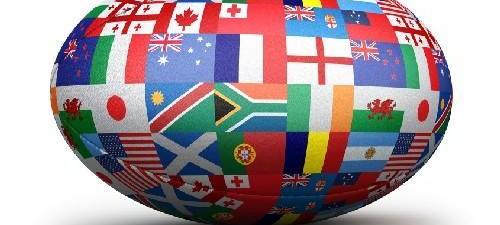
Interesting facts about languages of the world

1. How many languages are there? It’s estimated that up to 7,000 different languages are spoken around the world. 90% of these languages are used by less than 100,000 people. Over a million people converse in 150-200 languages and 46 languages have just a single speaker! Languages are grouped into families that share a common… Read More

Confusing words: Mansplaining

man·splain manˈsplān/ verb informal gerund or present participle: mansplaining (of a man) explain (something) to someone, typically a woman, in a manner regarded as condescending or patronizing. “I’m listening to a guy mansplain economics to his wife” Origin early 21st century: blend of man and explain.

Battle of the sexes: A-Z Differences Between Men and Women

Admitting Mistakes: Women will sometimes admit making a mistake. The last man who admitted that he was wrong was Gen. George Custer. Bathrooms: A man has at most six items in his bathroom – a toothbrush, toothpaste, shaving cream, razor, a bar of Dial soap, and a towel from the Holiday Inn. The average number… Read More

Neither men nor women: they are more creative TOGETHER

Abstract An experiment is reported in which the effect of sex composition on the creativity of brainstorming groups is investigated. It was hypothesized that mixed sex groups would be more creative than either homogeneous male or homogeneous female groups. Fifteen groups, consisting of four members each two males and two females; four females; four males,… Read More

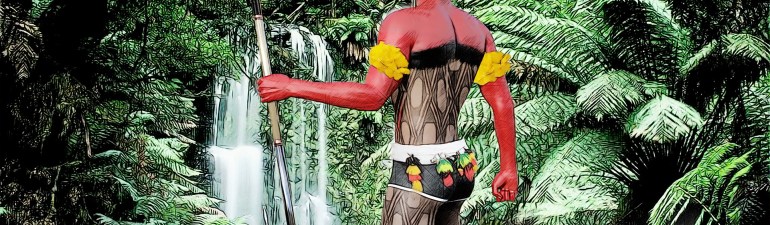
Pirahã People: carpe-diem culture doesn’t allow for abstract thought or complicated connections to the past — limiting the language accordingly

The Pirahã people (pronounced [piɾaˈhã]) are an indigenous hunter-gatherer tribe of Amazon natives, who mainly live on the banks of the Maici River in Brazil’s Amazonas state, in the territory of Humaitá and Manicoré municipality. As of 2004, they number about 360, which is sharply reduced from the numbers recorded in previous decades, and the… Read More