
People study English for different reasons, or not.
Some for professional reasons, perhaps a current need or future opportunity. Others say they have never needed, or hardly will, in their careers. Whether English needs to be “fluent,” as often required in job descriptions, is a debate that never quite settles with plenty of pros and cons depending on which side they take.
I still teach, it is essential to my role as a language consultant who interviews people to map their current level of English, assess evolution and support in hiring processes. With more than 1.000 interviews, I’ve seen it all, from people who are truly interested in learning to those who never prioritized the language for themselves. Among the latter, some manage to get by, others resent every hour spent on it. Ask them why they’re still in class and the answer is often practical, work requires it, or a promotion is on the line.
But I’ve noticed something odd among the ones who have children. Ask about their kids, and the answer changes entirely:
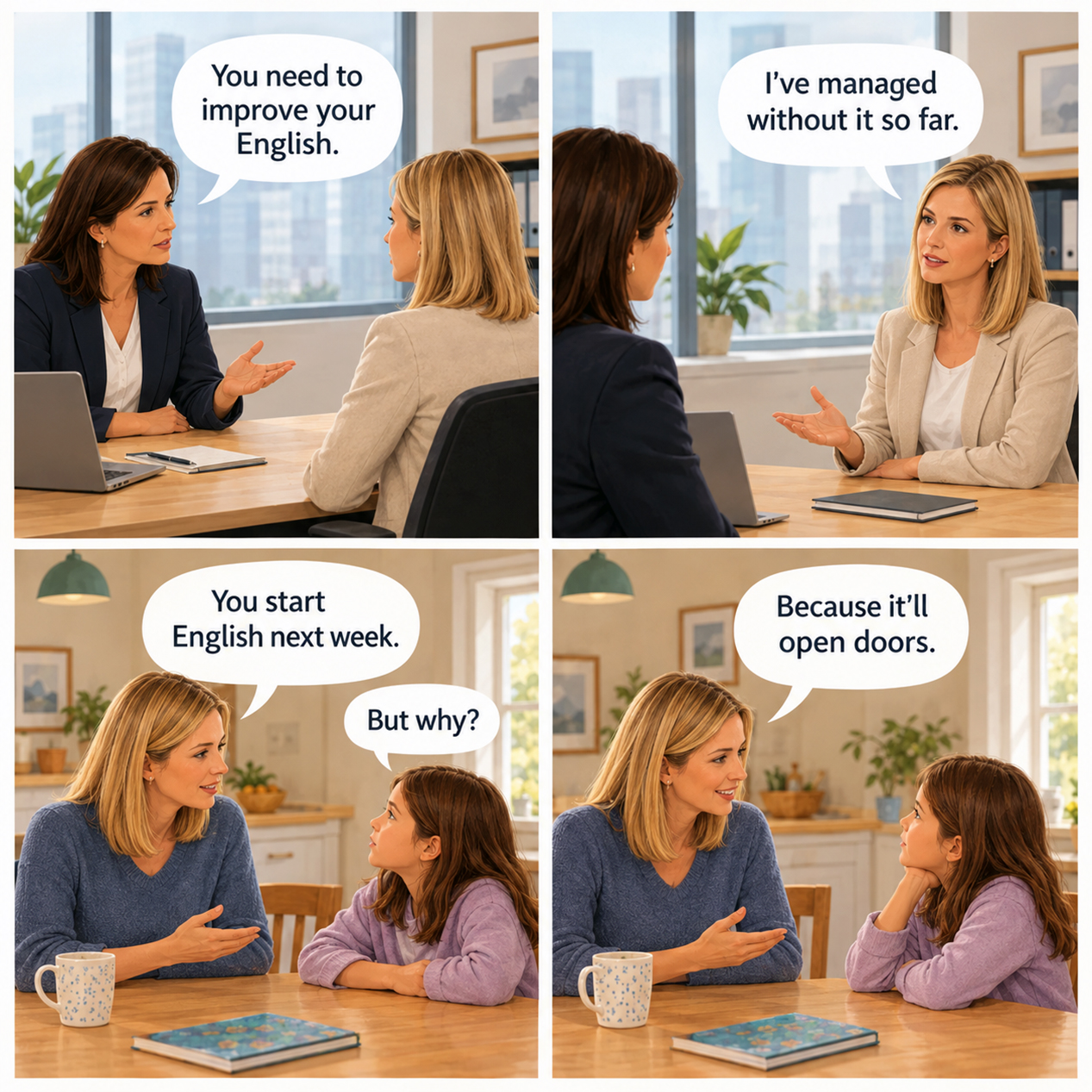
The same professionals who treat their own English as an obligation will spend months agonizing over which bilingual school to choose, or which language program fits their budget if a bilingual school isn’t within reach. They compare schools, ask other parents, I am often consulted. They worry about getting it right in a way they never worried about their own learning.
It’s a strange kind of asymmetry. The thing they won’t fully invest in for themselves becomes, for their children, something they refuse to get wrong.
I don’t think this is really about English. I think it’s about what people are willing to carry forward versus what they’re willing to carry themselves.

