Aprendizado de idiomas, cérebro bilíngue e educação bilíngue
Test of English as a Foreign Language or TOEFL, is a standardised test of English language proficiency for non-native English language speakers wishing to enroll in U.S. universities. The test is accepted by many English-speaking academic and professional institutions. TOEFL is one of the two major English-language tests in the world, the other being the IELTS. TOEFL is a trademark of ETS (Educational… Read More
Which parts of a person’s face do you look at when you listen them speak? Lip movements affect the perception of voice information from the ears when listening to someone speak, but native Japanese speakers are mostly unaffected by that part of the face. Recent research from Japan has revealed a clear difference in the… Read More
Sneak (snik) v. sneak n., adj. v.i. 1. to go in a stealthy or furtive manner; slink; skulk. 2. to act in a furtive or underhand way. v.t. 3. to move, put, pass, etc., in a stealthy or furtive manner: He sneaked the gun into his pocket. 4. to do, take, or have hurriedly or surreptitiously:… Read More
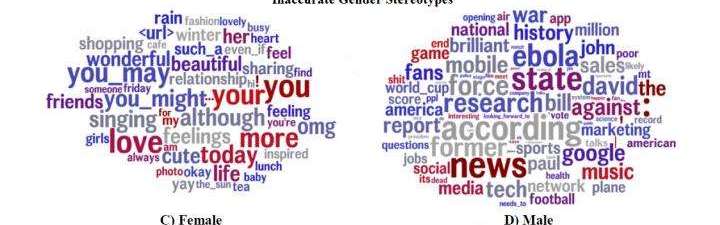
O que há em um tweet? Do gênero à educação, as palavras usadas nas mídias sociais carregam impressões para os outros. Usando tweets publicamente disponíveis, psicólogos sociais e cientistas da computação do Centro de Psicologia Positiva da Universidade de Pensilvânia, Alemanha e Austrália estão nos ajudando a analisar os estereótipos formados por escolhas de palavras… Read More
Uma equipe de pesquisa internacional liderada pela Universidade Carnegie Mellon descobriu que quando o cérebro “lê” ou decodifica uma frase em inglês ou português, seus padrões de ativação neural são os mesmos. Publicado em NeuroImage, o estudo é o primeiro a mostrar que diferentes línguas têm assinaturas neurais semelhantes para descrever eventos e cenas. Utilizando… Read More
What is a collocation? A collocation is two or more words that often go together. These combinations just sound “right” to native English speakers, who use them all the time. On the other hand, other combinations may be unnatural and just sound “wrong”. Look at these examples: Natural English… Unnatural English… the fast train fast… Read More
Members of the modern workforce might be surprised to learn that if they use the word “weekend” in a workplace email, chances are they’re sending the message up the org chart. The same is true for the words “voicemail,” “driving,” “okay” — and even a choice four-letter word that rhymes with “hit.” However a new… Read More