Do girls develop bigger vocabularies sooner because they’re more talkative?

Research says the gap is real, but the reason isn’t. By 18 months, girls do have measurably bigger vocabularies than boys. That part isn’t disputed. What a team at Duke wanted to know was why, and the common assumption, that girls simply talk more, or get more language exposure from caregivers, turned out to be… Read More

Meninas desenvolvem vocabulário maior mais cedo porque falam mais?

Pesquisa mostra que a diferença é real, mas o motivo não é esse. Aos 18 meses, meninas realmente têm vocabulário maior do que meninos, isso está bem medido. A pergunta era por quê, e a suposição mais comum (que meninas simplesmente falam mais, ou recebem mais estímulo verbal dos cuidadores) se mostrou errada. Uma equipe… Read More

Quer que seus filhos aprendam um segundo idioma? Comece por você.

Pesquisa da da Universidade de Cambridge mostra que a disposição dos jovens para estudar um segundo idioma é moldada muito mais pelas atitudes de seus pais do que por seus professores ou amigos. Os autores do estudo argumentam que os esforços para reverter o declínio constante na aprendizagem de línguas devem ter como alvo as… Read More

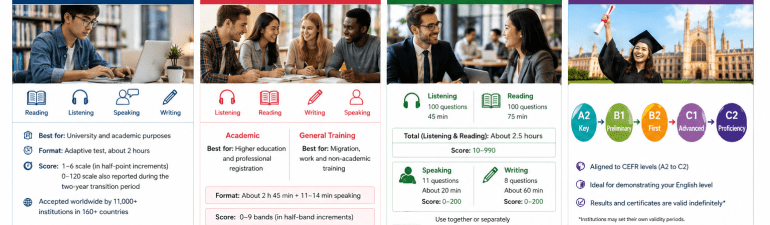
TOEFL, IELTS, TOEIC ou Cambridge? Qual certificado de inglês é o certo para você?

Se você está estudando inglês com um objetivo específico em mente, seja uma universidade no exterior, se candidatar a uma vaga de emprego, imigrar para outro país ou simplesmente comprovar seu nível, é provável que em algum momento você se depare com a mesma pergunta:   1. Qual teste de proficiência em inglês eu devo fazer?… Read More

TOEFL, IELTS, TOEIC or Cambridge? Which English Certificate Is Right for You?

If you are studying English with a specific goal in mind – going to university abroad, applying for a job, immigrating to another country, or simply proving your level – you may eventually face the same question: 1. Which English proficiency test should I take? TOEFL, IELTS, TOEIC and Cambridge English are among the best-known… Read More

Confusing words: Overtake Takeover Take Over

o·ver·take, oʊ vərˈteɪk/ Show Spelled [oh-ver-teyk] verb, -took, -tak·en, -tak·ing. verb (used with object) 1. to catch up with in traveling or pursuit; draw even with: By taking a cab to the next town, we managed to overtake and board the train. 2. to catch up with and pass, as in a race; move by:… Read More

Is the Em Dash Really an AI Giveaway?

One of the most common claims circulating online is that the use of the em dash (—) is a telltale sign of AI-generated writing. Not quite. The em dash wasn’t invented by AI. It has been part of English typography for centuries and has long been used by professional writers, editors, journalists, and publishers to… Read More

O que olhos azuis têm a ver com gestão de idiomas?

Estava no elevador de um hotel em Londres com minha mãe quando a porta quase fechou e uma mão apareceu. Entrou um casal de brasileiros em lua de mel, discutindo. Ele a acusava de traição com um amigo. Quando perceberam nossa presença, ela disse baixinho: “fala baixo, eles estão olhando, estão entendendo tudo.” Ele nos… Read More

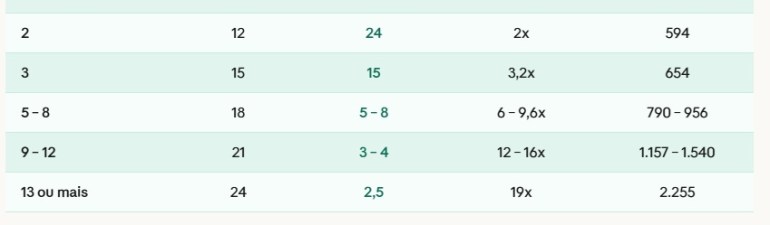
Por que seu curso de idiomas dura mais do que deveria

Quando você escolheu um curso de idiomas, que informações tinha para tomar essa decisão? Na maioria dos casos: tempo de mercado, preço, localização, talvez uma indicação. Raramente algo mais concreto do que isso. O mercado de ensino de idiomas é um dos que menos publica dados sobre produtividade. Não há benchmark acessível, não há índices… Read More

The Hidden Power of Words: Why Vocabulary Expands Reality

We often assume that language is simply a tool for describing reality. First we see the world, and then we label it. But what if that assumption is backwards? What if the words we know actually shape what we are capable of seeing, feeling, and distinguishing? Research in linguistics and psychology suggests that vocabulary does… Read More